Bangladesh Powerlifting Association – BPA


Gaston Parage 2012 - current

Detlev Albrings 2007 - 2012

Norbert Wallauch 1999 - 2007

Grahame Fong 1995 - 1999

Heinz Vierthaler 1983 - 1995

Robert "Bob" Christ 1972 - 1975

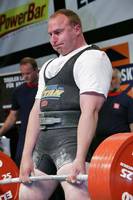
Sure, there were the three Olympic lifts - Clean and Press, Snatch and the Clean and Jerk. But Olympic lifting did not appeal to everybody, so around the world there were many strong men unable to, unsuited to, or unwilling to do the “Olympic Three”. Other lifts were used by bodybuilders as strength builders and among them there were the individual powerlifts and their variations, the squats, bench presses and dead lifts with big poundages performed by very powerful men during the 1950’s/1960’s. In the USA, Terry Todd was making squats in excess of 750lbs, bench at 500lbs, and dead lifts officially at 730lbs. Ronnie Ray was outstanding with many National titles benching 500lbs at 198lb bodyweight. Dave Moyer with his 450lb squat at 123lbs. Doug Hepburn and Benoit Cote in Canada, two Superheavies capable of huge lifts in the late 50's and 60s, with Hepburn credited with a 580lb plus bench press and 700lb squat and Cote with his 750lb dead lift. These lifters had been superceded by individual performances from such notables as Paul Anderson and Bob Peoples. They were the ones who were there when Powerlifting all started and helped set the standards for others to beat. Over in Australia, Bruce White was pulling 600lb plus dead lifts at 148 pounds, Ron Modra and Ray Rigby were prominent early Powerlifters in the late 1960's. In America, Olympic weightlifting was declining, while bodybuilding and powerlifting were on the up and up. In 1964, an unofficial American Powerlifting Championships took place in York, Pennsylvania. The AAU took control and as a result, the AAU finally staged its first national championship in 1965, with the bench press, squat, and deadlift selected as the championship powerlifts. USA Powerlifting used the same weight classes as Olympic lifting (123, 132, 148, 165, 181, 198, HWT). In 1967 a 242 lb class was added and contested at the American 1967 Senior National Powerlifting Championships.